In professional turf management, the lawn care calendar has two peak growth windows, not one. The first — April through mid-May — is well understood and reasonably well managed by most homeowners who are paying attention. The second window, which opens in late August and runs through mid-October as temperatures fall back into the cool-season sweet spot, is almost universally under-managed. For lawns in Lancaster, NY and Depew, NY, that neglect is one of the primary reasons so many properties enter spring in a weaker condition than they should.
Why Cool Temperatures Return the Lawn to Its Growth Peak
Kentucky Bluegrass and Tall Fescue don't experience summer as a period of growth — they experience it as a period of survival. When air temperatures consistently exceed 85°F and soil temperatures climb above 70°F, cool-season grasses shift their metabolic resources away from growth and toward stress maintenance. Visible growth slows. Root development slows. The lawn may hold its color under adequate moisture, but it isn't building the density and root mass that characterize healthy, vigorous turf.
When temperatures drop back below 75°F in late August — which in Erie County typically occurs in the final week of August or the first week of September — something measurable happens. Cool-season turf exits its stress mode and re-enters active growth, often within seven to ten days of the temperature shift. Root development resumes aggressively. Lateral spread restarts. Thin areas that persisted through summer begin filling in. The lawn is, in physiological terms, experiencing its second spring.
The September through mid-October window in Western New York delivers exactly the conditions cool-season turf most favors: moderate temperatures, reduced evapotranspiration, shortening days, and typically reliable rainfall from early fall weather systems moving through the Great Lakes corridor. These are among the best growing conditions of the entire year, and they arrive precisely when most homeowners are thinking about hanging up the mowing schedule.
What Happens to a Lawn That Isn't Mowed Through Fall
A lawn that is abandoned to irregular or infrequent mowing through September and October doesn't simply coast into dormancy. It accumulates problems that carry directly into the following spring.
First, tall, unmanaged turf heading into the dormancy period creates a dense thatch layer as the dying tissue compresses under its own weight and the first heavy snowfalls. That thatch layer insulates the soil surface, slowing spring warming and delaying green-up by weeks. It also creates the humid, dark environment at the soil surface that harbors snow mold — a fungal disease that is a particular problem in Western New York's heavy snowfall winters and that reveals itself as circular, matted patches when the snow melts in March.
Second, a lawn that grows tall and irregular through fall loses the lateral density it built during September's growth period. Without consistent mowing to stimulate the lateral rhizome spread that Kentucky Bluegrass relies on for self-thickening, that growth energy dissipates into vertical height rather than canopy density. The lawn enters dormancy taller but not thicker — a worse outcome from a spring performance standpoint than a lawn that was maintained consistently and entered dormancy at its ideal height of 3 to 3.5 inches.
The Last Cut: Timing and Height for Erie County
The final mowing of the season is one of the most consequential cuts of the entire year, and it requires a specific approach. The target is to have the lawn enter dormancy at a height of approximately 2.75 to 3 inches — slightly shorter than the summer maintenance height, but not scalped. This height is a deliberate calibration.
Too tall heading into dormancy — above 3.5 inches — and the excessive blade mass creates the thatch and snow mold conditions described above. Too short — below 2.5 inches — and the lawn enters winter with insufficient leaf tissue to support early spring photosynthesis once green-up begins, before soil temperatures have warmed enough to deliver root-zone nutrients.
The 3-inch target balances these competing risks. In the 14086 and 14043 zip codes, the timing for this final cut typically falls in the last week of October or the first week of November, depending on the season. The benchmark is not a calendar date but a growth condition: the lawn should have slowed to the point where it is growing less than a half-inch per week, but the soil should not yet have experienced a hard freeze. In Western New York, that window is narrower than most homeowners anticipate — and it closes quickly when the first significant cold front moves in off Lake Erie.
Leaf Management as a Fall Lawn Care Variable
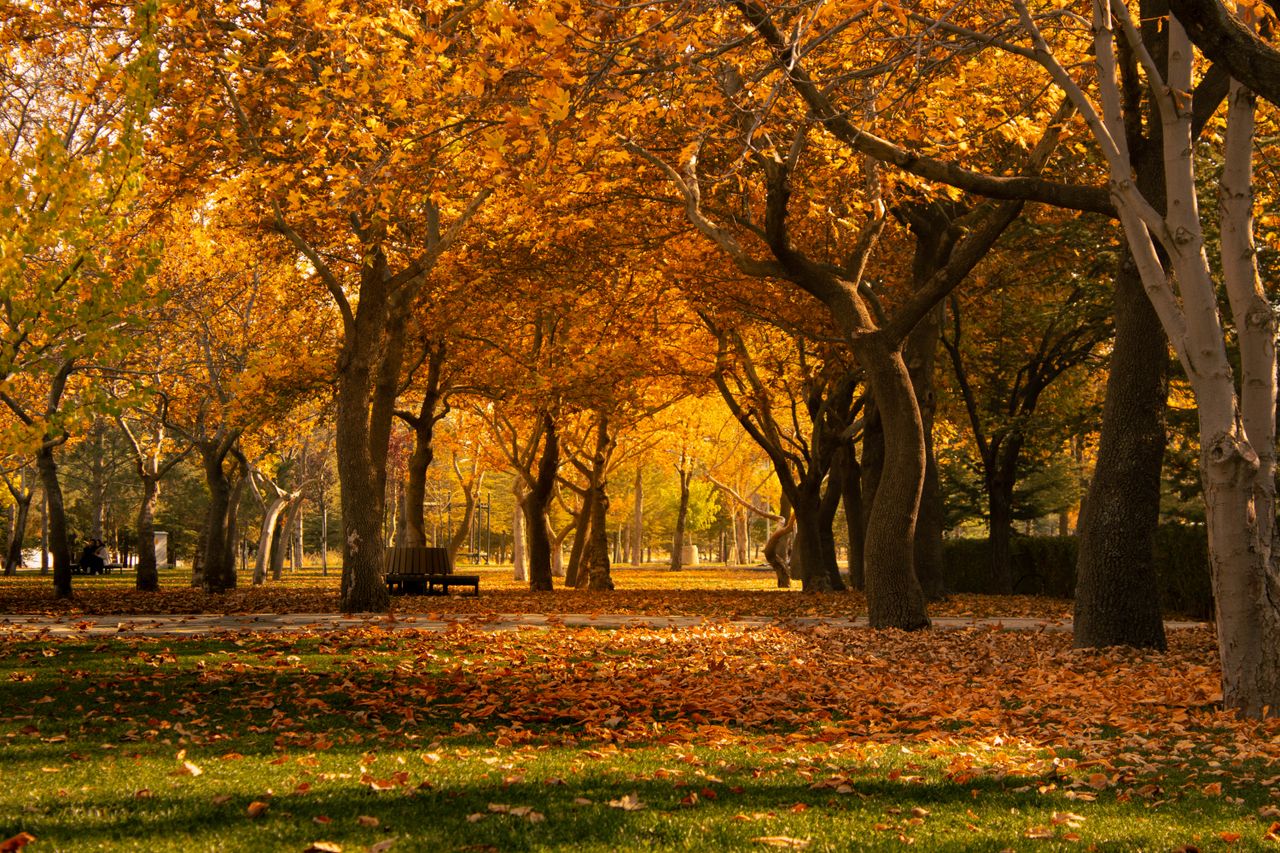
Lancaster and Depew are established communities with mature tree canopies, and fall means leaves. The interaction between leaf accumulation and lawn health is not a minor seasonal nuisance — it is one of the more consequential lawn care variables of the entire year in the 14086 and 14043 zip codes.
A layer of leaves more than a half-inch deep on a lawn surface blocks light, traps moisture, and creates the ideal environment for the fungal diseases that are most active during fall's cool, damp conditions. More critically, a heavy leaf layer sitting on turf that enters dormancy creates a smothering effect that can eliminate cool-season grass plants entirely in affected areas — producing the bare patches that are among the most common complaints homeowners bring to us in spring.
Consistent weekly lawn care service through October naturally manages leaf accumulation as part of the mowing and clearing process. The blower pass that concludes every North Lawn Care visit clears leaf debris from the lawn surface along with clippings, preventing the accumulative buildup that damages turf heading into winter.
Local Expert Tip
One of the most reliable indicators that the fall growth window is genuinely closed for the season in Western New York — and that the final cut has been made — is the nighttime temperature pattern, not the daytime high. Once overnight lows are consistently dropping below 40°F, the soil is approaching the temperature threshold below which cool-season grass roots become largely inactive and nutrient uptake slows to near zero. At that point, additional mowing is unlikely to stimulate lateral growth and the primary remaining objective is achieving the dormancy height target. In most Erie County years, that nighttime threshold arrives in mid-to-late October — earlier in cold, wet seasons, occasionally as late as early November in mild falls.
Fall Service as a Return on the Entire Season's Investment
Every professional input across the spring and summer growing season — proper mowing heights, consistent weekly service, timely fertilizer applications — builds toward a lawn that enters the fall window with strong density, deep roots, and healthy turf plants primed to take advantage of the second growth period. Abandoning consistent maintenance in September squanders that accumulated investment precisely when the lawn is most capable of converting care into structural improvement.
A lawn that receives consistent weekly 14086 lawn care service from early April through late October — the full active season as defined by the actual biology of cool-season turf rather than by convention — enters dormancy in demonstrably better condition than one that is managed only through summer. That condition difference is visible and measurable by March, before the first spring cut has been made.
North Lawn Care maintains active service routes in Lancaster and Depew through the end of October on every lawn we manage. The season ends when the biology says it ends — not when the calendar suggests it should. To have your lawn under that standard of seasonal management, call or text (716) 393-9597 or book your weekly service online.
Ready for a better-looking lawn?
Full-service mowing, edging, trimming & cleanup — flat $65.